


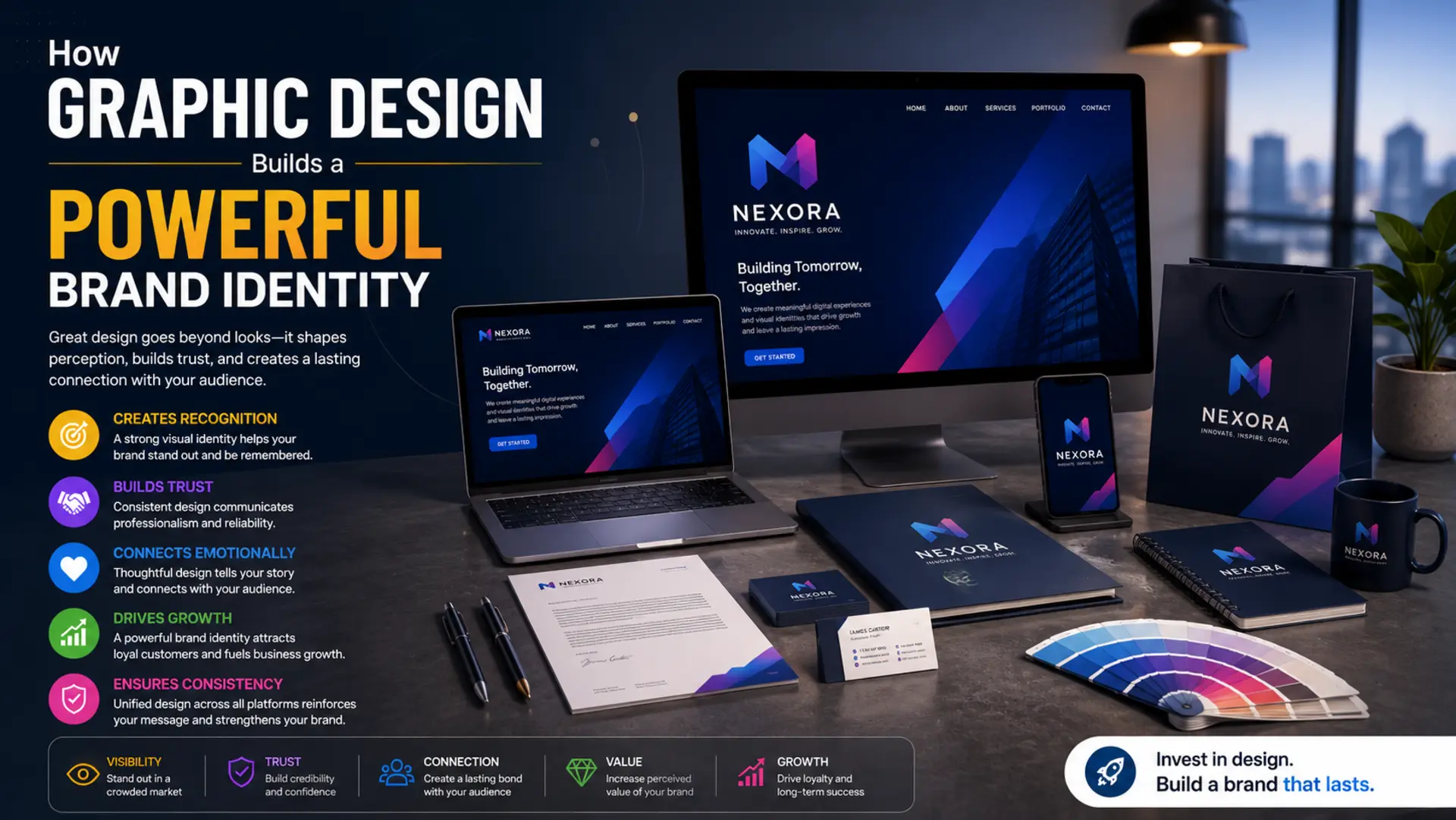
Graphic design plays a crucial role in shaping how customers perceive a business. In today’s competitive marketplace, businesses need more than great products or services to succeed—they need a strong and recognizable brand identity. Graphic design helps companies communicate their values, personality, and professionalism through visual elements such as logos, colors, typography, marketing materials, and digital assets.
A well-executed graphic design strategy can instantly capture attention, build trust, and create lasting impressions. Whether you’re a startup building your brand from scratch or an established company looking to refresh your image, graphic design is one of the most effective tools for establishing a memorable presence in the minds of customers.
In this guide, we’ll explore how graphic design contributes to brand identity, why it matters for business growth, and how companies can use graphic design to stand out in a crowded market.
It is the art and practice of creating visual content to communicate messages effectively. It combines creativity, strategy, and technology to produce visuals that engage audiences and support business goals.
It includes:
The purpose of graphic design is not simply to make things look attractive. It helps businesses communicate clearly, establish credibility, and create emotional connections with their target audience.
A brand identity is how a business presents itself visually and emotionally to customers. It represents the company’s personality, values, mission, and promise.
It is the foundation of brand identity because it transforms business concepts into visual experiences.
A strong brand identity helps businesses:
Without effective graphic design, businesses may struggle to establish a memorable presence and connect with their audience.
First impressions are formed within seconds.
When potential customers encounter your website, social media page, advertisement, or business card, they immediately begin evaluating your professionalism based on visual appearance.
Professional graphic design communicates:
Poor design, inconsistent branding, or outdated visuals can discourage customers from engaging with your business.
A strong first impression often determines whether a visitor becomes a customer or leaves for a competitor.
A logo is one of the most recognizable elements of a brand.
It serves as a visual symbol that customers associate with your business.
Effective logo graphic design should be:
Think about globally recognized brands. Their logos instantly trigger recognition and emotional associations.
A professionally designed logo becomes the cornerstone of your brand identity and serves as the foundation for all other visual assets.
Color plays a powerful role in brand communication.
Different colors evoke different emotions:
Graphic design professionals carefully select color palettes that align with brand values and target audiences.
Consistent color usage across all marketing materials strengthens brand recognition and helps create a cohesive visual identity.
Typography influences how people perceive your brand.
The fonts used in graphic design communicate personality and tone.
Examples include:
Professional typography improves readability while reinforcing brand identity.
Consistency in typography ensures that all communications feel unified and recognizable.
Consistency is one of the most important aspects of successful branding.
Graphic design establishes visual guidelines that ensure consistency across:
Consistent branding helps customers recognize your business instantly and builds trust over time.
Trust is essential for business success.
Customers are more likely to purchase from brands that appear professional and credible.
It contributes to trust by creating:
Businesses that invest in it demonstrate commitment to quality and attention to detail.
Professional visuals reassure customers that they are dealing with a legitimate and reliable company.
Brand recognition is the ability of customers to identify your business through visual cues.
Strong design makes brands easier to recognize through:
The more often customers encounter consistent branding, the stronger their familiarity becomes.
Improved recognition can lead to:
Consumers often make purchasing decisions based on emotions.
Graphics design influences emotions through visual storytelling.
Effective visual communication can make customers feel:
Brands that establish emotional connections often enjoy stronger customer loyalty and higher lifetime value.
Through carefully crafted visuals, businesses can create memorable experiences that resonate with their audience.
Social media platforms are highly visual environments.
It helps businesses create:
High-quality visuals improve engagement rates and encourage users to interact with content.
Consistent graphic design across social platforms strengthens brand identity and increases recognition.
Content marketing relies heavily on visual elements.
It enhances content through:
Visual content makes information easier to understand and more engaging for readers.
As a result, businesses often experience improved website traffic and user engagement.
Advertising success depends heavily on visual appeal.
It improves advertising performance by creating:
Strong visuals increase click-through rates and improve campaign effectiveness.
Your website serves as your digital storefront.
It contributes to website branding through:
A visually appealing website enhances user experience and encourages visitors to explore further.
When graphic design aligns with branding goals, websites become powerful marketing and conversion tools.
Effective graphics design directly supports business growth.
Benefits include:
Businesses with professional branding often outperform competitors who neglect visual identity.
Graphic design helps companies communicate value more effectively and attract ideal customers.
Using different styles, colors, and fonts across platforms weakens brand identity.
Consistency is essential for building recognition and trust.
Too many visual elements can overwhelm users.
Simple and clear designs are often more effective.
Designs should always prioritize readability and user experience.
Complicated typography or low-contrast colors can reduce effectiveness.
Many customers interact with brands on mobile devices.
Graphic design should be optimized for all screen sizes to ensure a consistent experience.
Minimalism focuses on simplicity, clarity, and functionality.
Clean layouts help users focus on key messages.
Businesses increasingly use custom illustrations to create unique brand identities.
Custom artwork differentiates brands from competitors.
Animated visuals and motion graphics continue to grow in popularity.
They increase engagement and improve storytelling.
Artificial intelligence is changing how designers create content.
AI tools assist with:
While AI improves efficiency, human creativity remains essential for building authentic brands.
Technology and consumer expectations continue to evolve.
Future graphics design trends are likely to focus on:
Businesses that embrace innovation while maintaining strong brand consistency will continue to stand out in competitive markets.
It helps businesses communicate visually, establish credibility, build trust, and strengthen brand identity.
Yes. Professional graphics design improves customer perception, engagement, and conversion rates, which can positively impact sales.
Key elements include logos, colors, typography, imagery, and consistent visual branding.
Businesses should periodically review branding materials to ensure they remain relevant, modern, and aligned with company goals.
Graphic design is much more than creating attractive visuals—it is a strategic business tool that shapes brand identity, builds trust, and influences customer behavior. Through effective use of logos, typography, colors, marketing materials, and digital assets, graphic design helps businesses establish a memorable presence and communicate their value to the world.
A strong brand identity supported by professional graphic design can improve recognition, strengthen customer loyalty, and contribute significantly to long-term business growth. Whether you’re building a new brand or refining an existing one, investing in graphic design is one of the most valuable decisions you can make for your business.





Leave A Reply Now