


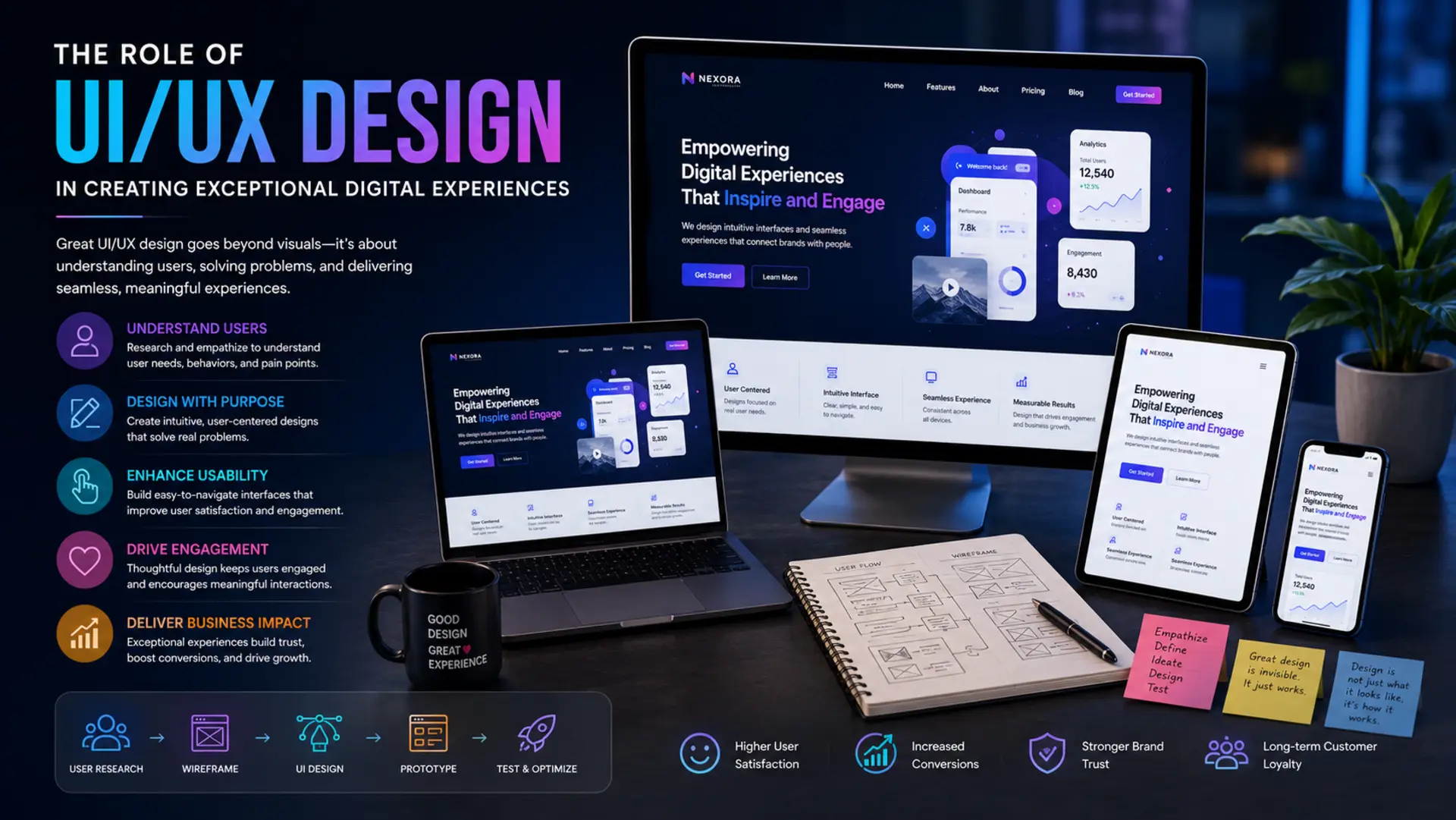
UI/UX Design has become one of the most important factors in the success of modern websites, mobile applications, and digital products. In an increasingly competitive digital landscape, businesses must do more than simply offer quality products or services—they must provide users with seamless, intuitive, and enjoyable experiences. UI/UX Design helps organizations achieve this by focusing on how users interact with digital platforms and ensuring every interaction is meaningful, efficient, and satisfying.
Whether a customer is browsing an eCommerce website, using a mobile application, or interacting with an online service, their experience directly influences how they perceive the brand. A well-executed UI/UX Design strategy can improve user satisfaction, increase conversions, reduce bounce rates, and strengthen customer loyalty. Businesses that prioritize UI/UX Design are better equipped to meet user expectations and achieve long-term growth.
In this comprehensive guide, we will explore the importance of UI/UX Design, its key principles, benefits, processes, challenges, and future trends shaping the digital world.
It is the process of designing digital products that are visually appealing, easy to use, and optimized for user satisfaction.
While often grouped together, UI and UX serve different purposes:
UI focuses on the visual aspects of a digital product, including:
The goal of UI design is to create interfaces that are aesthetically pleasing and easy to interact with.
UX focuses on the overall experience users have while interacting with a product.
UX design includes:
The goal of UX design is to make digital interactions simple, efficient, and enjoyable.
Together, UI and UX Design create products that balance beauty and functionality.
Today’s users have countless choices online. If a website or application is difficult to use, users can quickly switch to a competitor.
It helps businesses:
A well-designed digital experience creates positive interactions that encourage users to return and engage with the brand again.
Satisfied users are more likely to engage with a product and recommend it to others.
It improves satisfaction by:
When users can accomplish their goals quickly and easily, they develop a positive perception of the brand.
Bounce rate measures how quickly visitors leave a website.
Poor design often causes users to abandon websites due to:
Effective Design encourages visitors to explore more pages and spend more time interacting with content.
Every business website has goals such as generating leads, collecting inquiries, or making sales.
It supports conversions by:
Small design improvements can significantly impact conversion rates and revenue.
Positive experiences create emotional connections.
Users who consistently enjoy interacting with a brand’s digital products are more likely to:
It contributes directly to long-term customer retention.
Successful design begins with understanding users.
User-centered Design focuses on:
Design decisions should always prioritize the user’s perspective.
Consistency helps users navigate digital products with confidence.
Consistency includes:
Design systems help maintain consistency across websites and applications.
Accessibility ensures digital products can be used by people with diverse abilities.
Accessible Design includes:
Accessibility not only improves inclusivity but also enhances overall usability.
Simplicity is one of the most effective design principles.
Simple Design helps users:
Removing unnecessary complexity improves the overall experience.
Research is the foundation of successful design.
Research activities include:
Research helps designers make informed decisions based on real user needs.
Information architecture organizes content logically.
Good information architecture helps users:
A well-structured system reduces confusion and improves usability.
Wireframes serve as blueprints for digital products.
Wireframing allows designers to:
Wireframes help identify issues before development begins.
Prototypes simulate real user interactions.
Benefits of prototyping include:
Interactive prototypes help teams test concepts before launch.
Testing validates design decisions.
Common testing methods include:
Continuous testing ensures products evolve according to user needs.
Website development and UI/UX Design work closely together.
While developers focus on functionality, designers focus on usability and experience.
Effective collaboration leads to:
A technically sound website with poor usability will struggle to achieve business goals.
Mobile users expect fast and intuitive experiences.
UI/UX Design for mobile applications focuses on:
Mobile-first design has become essential as smartphone usage continues to grow worldwide.
Digital marketing campaigns often direct traffic to websites and landing pages.
Even successful marketing campaigns can fail if the user experience is poor.
It improves marketing performance by:
Marketing and design must work together to maximize business results.
Design decisions should never rely solely on assumptions.
Without research, businesses risk creating experiences that fail to meet user expectations.
Too many features, menus, and interactions can overwhelm users.
Simple and focused designs often produce better results.
Inconsistency creates confusion.
Users should encounter predictable interactions throughout a website or application.
Mobile experiences are no longer optional.
Businesses must ensure interfaces work effectively across all devices.
Artificial intelligence is helping designers create personalized experiences.
AI can analyze user behavior and deliver customized content and recommendations.
Voice interfaces are becoming increasingly popular through digital assistants and smart devices.
Designers must adapt experiences to support voice interactions.
Technologies such as augmented reality (AR) and virtual reality (VR) are creating new opportunities for immersive experiences.
Businesses are beginning to explore interactive digital environments that engage users in innovative ways.
Modern users expect personalized experiences.
Future UI/UX Design strategies will increasingly focus on:
Businesses can evaluate Design performance using metrics such as:
Tracking these metrics helps identify opportunities for continuous improvement.
It improves user satisfaction, usability, engagement, and conversion rates while helping businesses build stronger customer relationships.
Yes. Better user experiences often lead to improved engagement metrics, lower bounce rates, and longer session durations, which support SEO performance.
No. Businesses of all sizes benefit from investing in it because user experience directly impacts customer satisfaction and business growth.
Businesses should continuously monitor user feedback and performance data to identify opportunities for improvement and optimization.
UI/UX Design is far more than creating attractive interfaces—it is the foundation of exceptional digital experiences. By focusing on user needs, simplifying interactions, improving accessibility, and creating intuitive journeys, itn helps businesses build stronger relationships with their audiences.
As technology continues to evolve, user expectations will continue to rise. Organizations that prioritize UI/UX will be better positioned to deliver memorable experiences, increase customer satisfaction, improve conversions, and achieve sustainable growth in the digital age.
Whether you’re designing a website, mobile application, or digital platform, investing in UI/UX is one of the most valuable decisions you can make for your business and your users.






Leave A Reply Now