


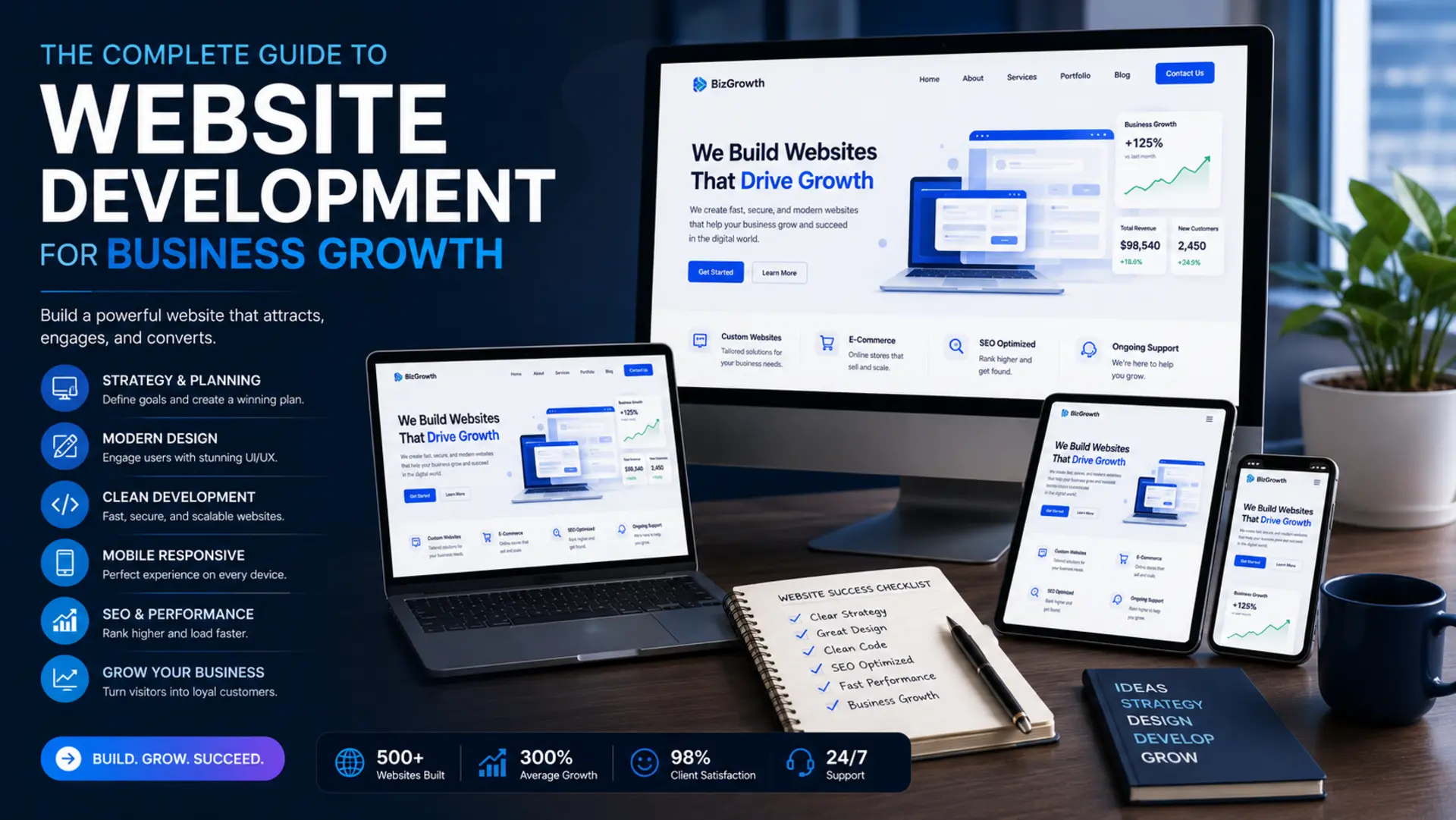
Website development is one of the most important investments a business can make in today’s digital landscape. A professionally developed website serves as the foundation of your online presence, helping potential customers discover your products, services, and brand. Whether you are a startup, small business, or established enterprise, it plays a critical role in building credibility, increasing visibility, and driving long-term business growth.
As consumer behavior continues to shift toward online research and purchasing, businesses without a strong website risk losing opportunities to competitors. Modern website goes beyond creating attractive pages. It focuses on user experience, performance, security, search engine optimization, and conversion optimization to ensure visitors have a seamless experience.
In this comprehensive guide, we’ll explore everything you need to know about website and how it contributes to business success.
It refers to the process of creating, building, and maintaining websites. It involves a combination of coding, design implementation, content management, functionality development, and performance optimization.
It typically includes:
The goal of website is to create a website that is visually appealing, functional, secure, and capable of meeting business objectives.
Modern consumers rely heavily on the internet when searching for products, services, and information. Your website often serves as the first interaction customers have with your business.
A professionally developed website helps businesses:
Without effective website development, businesses may struggle to compete in an increasingly digital marketplace.
First impressions matter. Visitors form opinions about your business within seconds of landing on your website.
A professionally developed website demonstrates:
Poorly designed websites can negatively impact customer perception and reduce conversion opportunities.
When customers see a polished, modern website, they are more likely to trust your business and engage with your services.
User experience is a major factor in website success.
Professional website development focuses on:
A positive user experience encourages visitors to stay longer, explore more pages, and take desired actions.
Satisfied users are more likely to become customers and recommend your business to others.
Search engine optimization (SEO) and website development work together to improve online visibility.
A well-developed website includes:
These factors help search engines understand and rank your content more effectively.
Higher rankings lead to increased organic traffic and more potential customers.
The ultimate goal of website development is to convert visitors into customers.
Professional websites use:
Every design and development decision should support business objectives and encourage conversions.
Mobile devices account for a significant portion of internet traffic worldwide.
Responsive website development ensures your website adapts to different screen sizes, including:
Benefits include:
Google also prioritizes mobile-friendly websites in search results.
Website speed directly impacts user satisfaction and business performance.
Slow websites often result in:
Professional website development focuses on:
Fast websites create better experiences and improve overall business results.
Cybersecurity is essential for protecting customer data and maintaining trust.
Secure website development includes:
Security breaches can damage a company’s reputation and lead to financial losses.
Investing in secure website development protects both businesses and customers.
Every successful website begins with careful planning.
The planning phase includes:
A clear strategy helps ensure the final website aligns with business objectives.
The design phase focuses on creating visual layouts and user experiences.
Key design elements include:
Good design improves usability and supports business goals.
During development, designers’ concepts are transformed into functional websites.
This stage may include:
Developers ensure all features work properly and perform efficiently.
Before launching, websites undergo extensive testing.
Testing includes:
Once testing is complete, the website can be launched confidently.
Mobile optimization is no longer optional.
Businesses that neglect mobile users risk:
Mobile-friendly website development is essential for success.
Confusing navigation frustrates visitors.
Good navigation should be:
Users should find information quickly and efficiently.
Performance issues can negatively affect user satisfaction and search rankings.
Regular performance monitoring helps identify and resolve problems before they impact users.
A website requires valuable content to attract and engage visitors.
Effective content includes:
High-quality content improves SEO and builds trust.
Artificial intelligence is transforming website development through:
AI can improve efficiency and customer satisfaction.
Progressive Web Apps (PWAs) combine the advantages of websites and mobile applications.
Benefits include:
Many businesses are adopting PWAs to improve customer experiences.
Voice search usage continues to grow.
Website development strategies now include:
Businesses that adapt early can gain a competitive advantage.
Sustainability is becoming increasingly important.
Eco-friendly website development focuses on:
Sustainable websites contribute to environmental responsibility while improving performance.
Graphic design enhances website aesthetics and branding.
Professional visuals help:
Combining website development with graphic design creates memorable user experiences.
UI/UX design focuses on usability and user satisfaction.
Effective collaboration between website development and UI/UX design results in:
Digital marketing campaigns rely on strong websites to convert traffic into customers.
A professionally developed website supports:
It serves as the foundation for successful digital marketing efforts.
Simple websites may take 2–6 weeks, while complex projects can require several months depending on features and functionality.
It’s influences site speed, mobile responsiveness, security, and technical SEO factors that impact search rankings.
Yes. It improves user experience, builds trust, and increases conversion opportunities.
Businesses should regularly update content, plugins, security features, and design elements to maintain performance and relevance.
It is far more than building a digital presence—it is a strategic investment in business growth. A professionally developed website helps establish credibility, improve user experience, enhance search engine visibility, and generate valuable leads. As technology continues to evolve, businesses that prioritize website development will be better positioned to compete, adapt, and succeed in the digital marketplace.
Whether you’re launching a new website or improving an existing one, investing in professional website development can deliver long-term benefits that support your business goals and drive sustainable growth.





Leave A Reply Now